
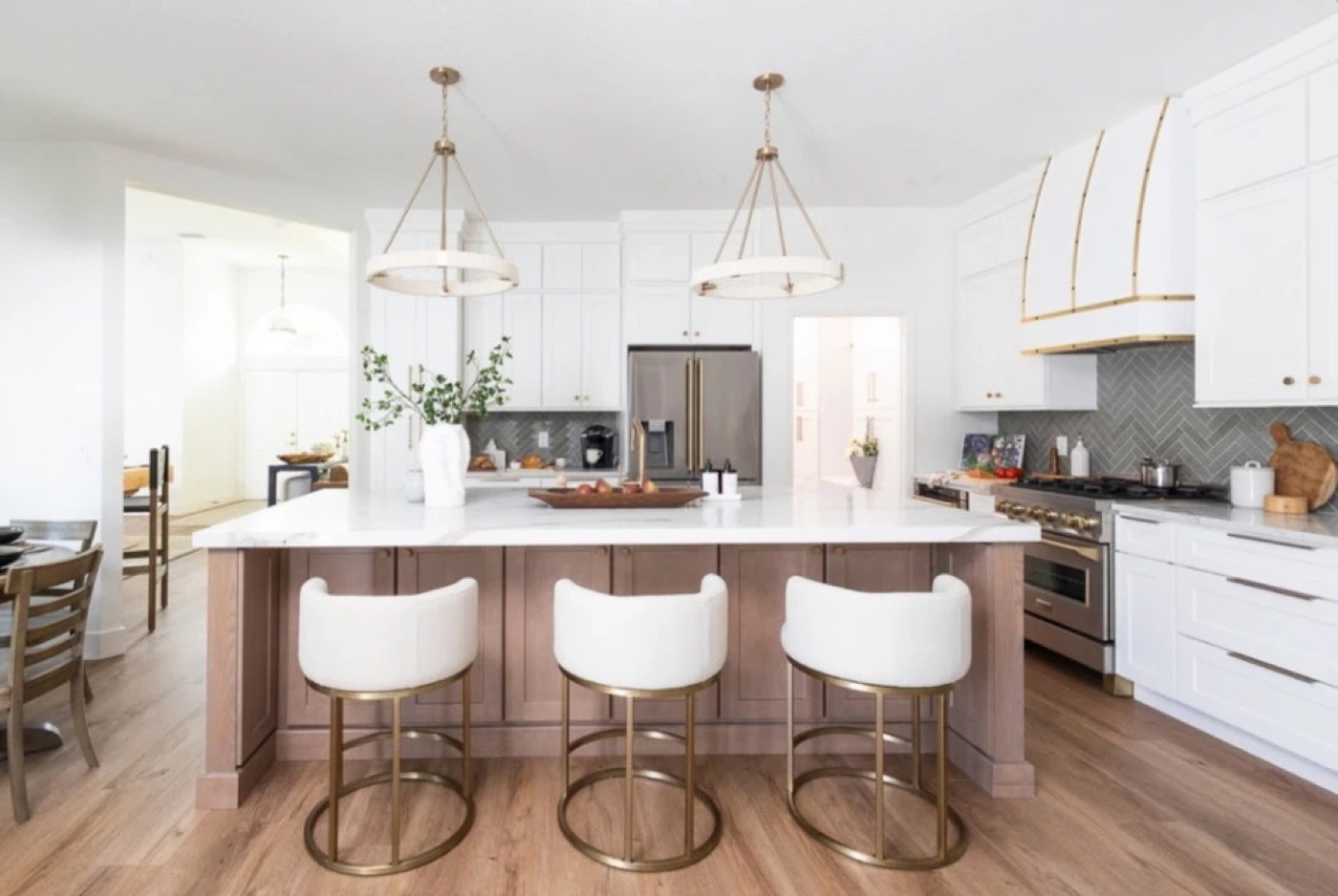
Color is the hardest decision in most kitchens, and on the coast there’s a practical side to it too. Here’s how paint and stain actually behave, and how to choose.
Wood moves, and paint shows it
Real wood takes on and gives off moisture as the seasons change, and it expands and shrinks a little as it does. On a five-piece door like a shaker, the center panel is designed to float inside the frame so it can move. On a painted door that movement can show up as a fine line where the panel meets the frame. It’s normal wood behavior, not a defect, but people notice it on a solid white door.
Where stain wins
A stained finish lets the grain show through, which hides that seasonal line and also hides the small dings that kitchens collect near the sink, the trash pull-out and the dishwasher. Each species looks different: oak shows strong grain, cherry darkens with age, and walnut is rich from the start. See them on our wood and materials page.
Where paint wins
Paint gives you exact color: crisp white, a soft greige, navy, sage. Small chips are easy to touch up. If you love a light, bright kitchen, paint is usually the answer. Our guides to white shaker, grey and greige and navy say where each color works and where it goes wrong.
Why so many coastal kitchens use both
A two-tone kitchen is one of our most common requests: painted perimeter cabinets for brightness, and a stained wood island to take the daily wear and warm up the room.
Coastal care tips
- Keep the house conditioned. Big swings in humidity are hard on any wood, painted or stained.
- If a beach house sits closed up for long stretches, keep the air conditioning or a dehumidifier running.
- Wipe up water at the sink and dishwasher edges, and use the touch-up kit early on chips.
Color on a screen isn’t color in your kitchen. Come see the doors at the showroom, or we’ll bring samples to the house.